Categories
News

UCFL Languages Research Database

The Reading Bodies project has been selected as one of ten projects to help launch the new University Council for Languages Research Database (Autumn 2025) — a tool designed to connect languages research with policymakers in an accessible and practical way.

For more information, please visit our Impact & Policy page.

Categories
Events News

Reading Bodies at WISPS Conference 2025

Looking forward to the Women in Spanish and Portuguese Studies Annual Conference, hosted by the University of Exeter, on 31 October and 1 November 2025! This year’s theme is Transforming Narratives: Conference 2025 | WISPS

Prof. Katharine Murphy will be presenting research for the Reading Bodies project on ‘Writing for Women’s Health: Maternal Exhaustion and Societal Constraints in Carmen de Burgos’ La rampa (1917)’. Thanks to the organisers of this year’s WISPS conference!

Categories
Articles News

Reading Bodies ‘takeover’ of The Polyphony

We are excited to launch the Reading Bodies ‘takeover’ of The Polyphony, ‘a web platform that aims to stimulate, catalyse, provoke, expand and intensify conversations in the critical medical humanities’, hosted by the Institute for Medical Humanities at Durham University.

In the opening piece today, Katharine Murphy introduces the Reading Bodies takeover and discusses what historical discourses of illness in European literatures and cultures contribute to the medical humanities: Historical Narratives of Illness in the Multilingual Medical Humanities – the polyphony

The ‘takeover’ presents five connected pieces, each of which will be published on consecutive days this week (20th to 24th October 2025), and is edited by Jordan McCullough. We invite you to follow the series!

More information is available on our Publications page.

Categories
News

Reading Bodies at Faculty Research Celebration

Picture by Jim Wileman – Research Celebration, Reed Hall.

The Faculty of Humanities, Arts and Social Sciences Research Celebration took place at Reed Hall, University of Exeter on 16 October 2025. Project Lead Katharine Murphy presented the Reading Bodies project in conversation with historian Dr Ljubica Spaskovska on research intersections between medical humanities narratives and histories of medical care.

Our project poster, designed by Olivia Glaze, was on display for the Gender and Sexuality thematic stand. Thanks to the HASS leadership and all the organisers for such an enjoyable event!

Categories
Articles News

Reading Bodies special issue published

A collection of articles by the project research network for an extended special issue of Journal of Romance Studies 25.3 (2025), 293-530 on ‘Reading bodies: Narrating illness in European literatures and cultures (1870s to 1960s and beyond)’, edited by Katharine Murphy and Olivia Glaze, is now published! For more information about project outputs, please visit our Publications page.

Categories
News

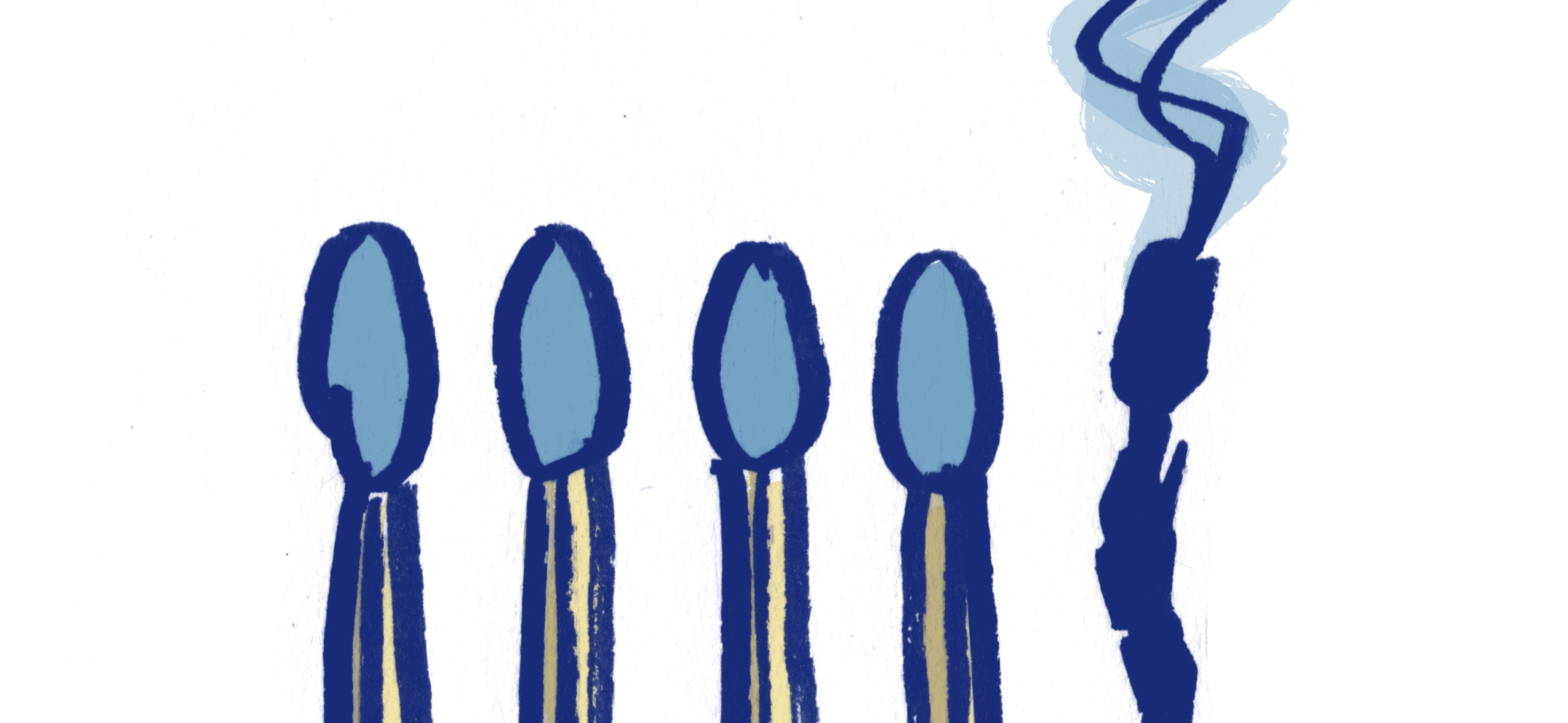
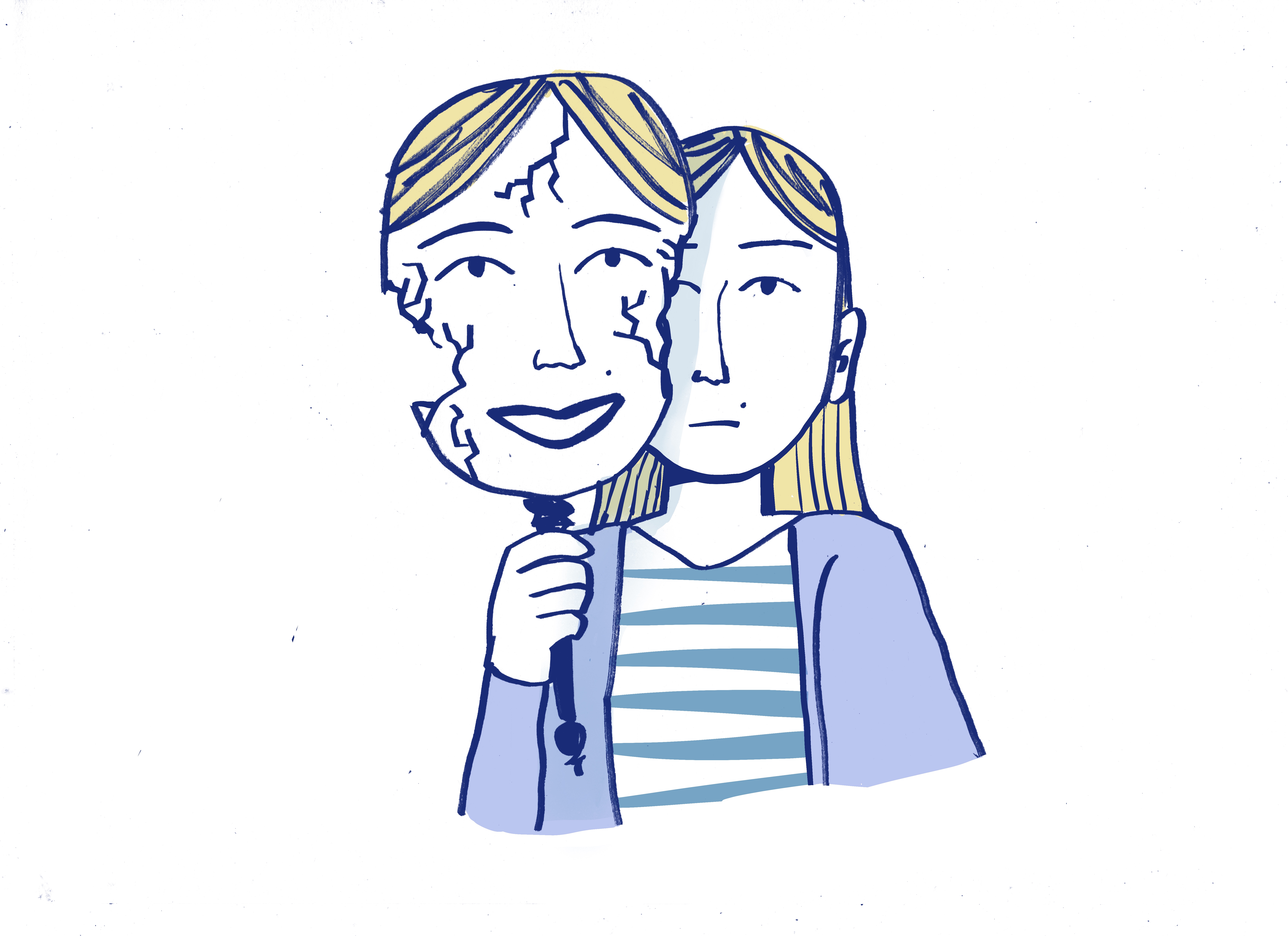
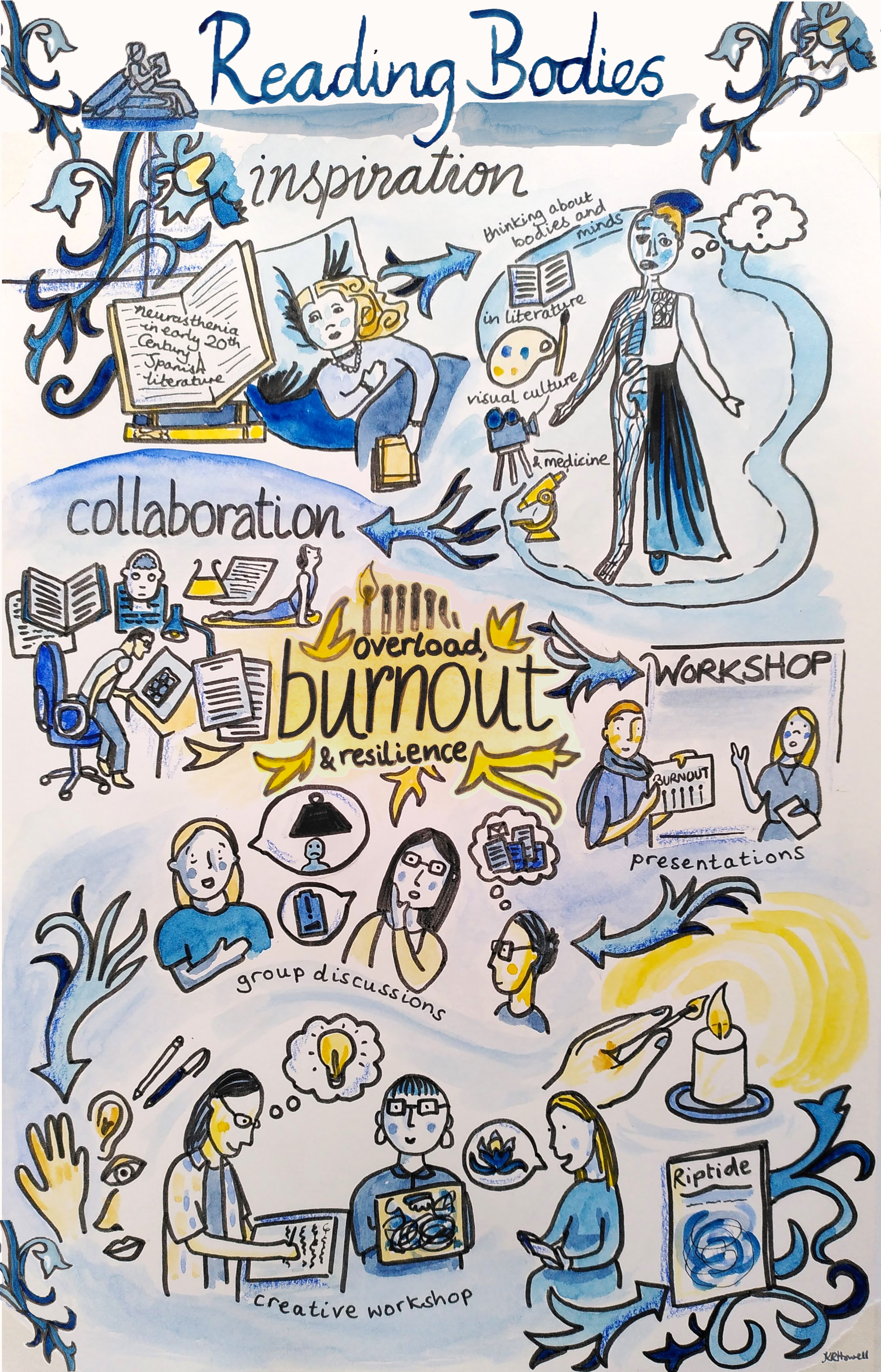
The Burnout Booklet: A Health Resource for Patients and Practitioners

We are excited to launch The Burnout Booklet: A Health Resource for Patients and Practitioners, an Impact & Policy output for this project.

Read more about the project in the University news: Language scholars produce illustrated health booklet on burnout – News

If you would like to provide brief feedback on the booklet, please leave your comments via the following link:

Categories
News Reviews

Reflections on Reading Bodies (2023-2025)

As we reach the final stages of the Reading Bodies grant, here are some reflections on the shape, scope and challenges of the project over the last 20 months:

This AHRC-funded multilingual project has sought to address the under-representation of Hispanic Studies research in the wider field of Medical Humanities. To achieve this objective, the project has facilitated exchanges with specialists working on literary and cultural representations of health and illness in French, Portuguese, Italian and German Studies. It includes the following highlights:

Year One

  • Established an international Reading Bodies Research Network with specialists in the UK, Europe and USA, through regular online meetings to facilitate the exchange of ideas and perspectives.
  • Held academic workshops in 2024 at the Institute of Languages, Cultures and Societies (University of London) and University of Exeter;
  • Contributed to the Multilingual Medical Humanities series of The Polyphony;
  • Established partnerships with arts and cultural organisations, writers, artists and health professionals;
  • Developed an extended Special Issue with the Journal of Romance Studies on ‘Reading Bodies: Narrating Illness in European Literatures and Cultures (1870s to 1960s and Beyond)’, forthcoming in Autumn 2025.
  • More information on outputs can be found here.

Year Two

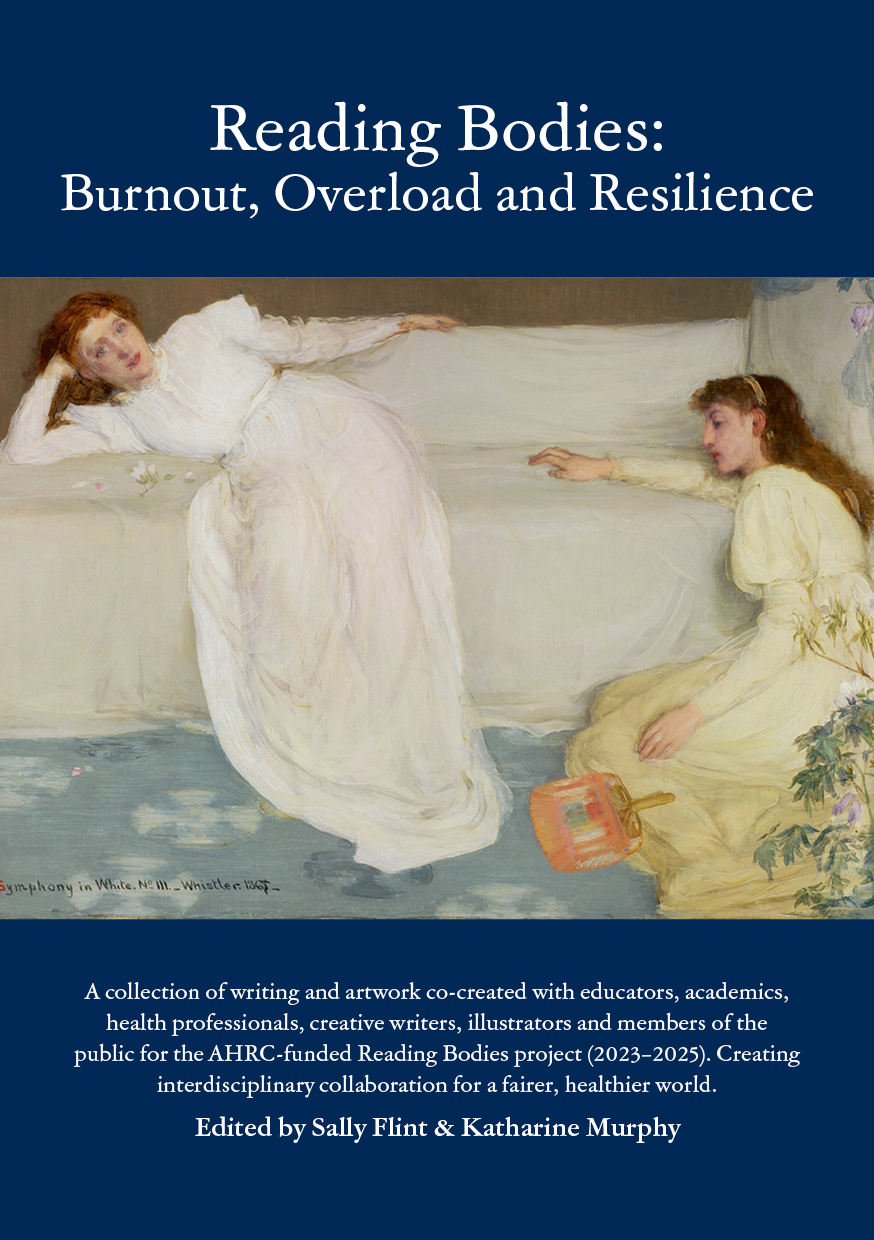
  • Hosted creative workshops and public engagement activity in Exeter and London, leading to the Reading Bodies: Burnout, Overload and Resilience anthology (2024);
  • Shared our research impact via the University’s Public Engagement with Research blog and University News;
  • Held an ‘in conversation’ online event about writing bodies and health with acclaimed author Sarah Moss. This interview aimed to establish connections between research on literary representations of health and illness in the late 19th and early 20th centuries and their relevance in the present day;
  • Disseminated our research findings via conferences such as the Association of Hispanists of Great Britain and Ireland, Edinburgh University (April 2025) and Northern Network for Medical Humanities Research 2025 Congress on ‘TONGUES: Medical Humanities across Linguistic and Cultural Frontiers’ (May 2025).

If you’re interested in learning more about these activities and the wider field of Multilingual Medical Humanities, please follow our Reading Bodies Multilingual Network on Bluesky.
Categories
Events News

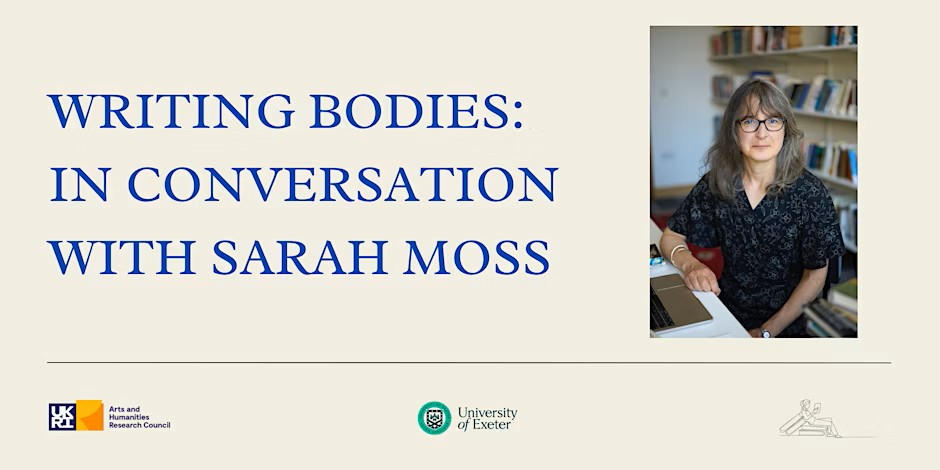
Writing Bodies: In Conversation with Sarah Moss

Thank you so much to everyone who attended our In Conversation event on 7 May with acclaimed author Sarah Moss. We were thrilled to host Sarah as she delivered a generous reading from her recent work, My Good Bright Wolf: A Memoir.

The conversation, led by Katharine Murphy, explored a wide range of topics, including the intricacies of writing about the body and illness, whether writing can serve a therapeutic purpose, and the formal challenges of life writing and fiction.

Attendees engaged meaningfully during the Q&A session, chaired by Laura Salisbury, asking insightful questions about the literary references in Sarah’s work, the balance between writing and day-to-day life, and how to maintain a regular writing practice.

The event was well-attended by academics and members of the public. Feedback included:

‘I personally love hearing tales from the intersection of motherhood, creativity, and academia.’

‘It was wonderful, and helped me think afresh about writing, resilience, and the therapeutic.’

‘This was absolutely fascinating!.’

‘[I enjoyed] the introduction to this wonderful research and the links to explore more.’

Watch the recording of the event here:

Reading and Writing Bodies

The public engagement activities for Reading Bodies have considered the present-day relevance of historical discourses about illness, health and the body. Echoing our project research findings, Sarah Moss reflected on the ways in which reading literary texts from the past provide a way into exploring illness in her own writing, exemplified by an array of eighteenth- and nineteenth-century literary intertexts in her book My Good Bright Wolf. She explained that her novel Bodies of Light, although set in the nineteenth century, comments on health inequalities past and present, including contemporary pressures on the NHS. During our conversation, Sarah also expanded on her critical response to contemporary theories of resilience. Underscoring the importance of recognising the impact of social determinants of health, she commented that resilience is:

‘a term that really risks transferring structural problems to individuals; […] I’m very skeptical of anything that seeks to require individuals to resolve structural problems in their own bodies or in their own mind’.

We were so pleased to have the chance to discuss the findings of our project research on reading illness in late nineteenth- and early twentieth-century European literatures and cultures with a contemporary author who has written so extensively on the body. As we noted in the introduction to this event, Sarah’s work:

‘speaks profoundly to the questions of what it means to write and to read embodiment, including in states of illness and distress. Her close attention to the texture of lived experience also traces out how aesthetic forms might create new conditions, both for understanding and potentially for wellbeing’.

Pre-order Sarah Moss’s new book, Ripeness, here: https://www.panmacmillan.com/authors/sarah-moss/ripeness/9781529035490

Categories
Events News

Reading Bodies News Item

We are delighted to share a news feature on how public engagement activity for Reading Bodies underscores the contemporary relevance of our project research on late nineteenth- and early twentieth-century European literature:

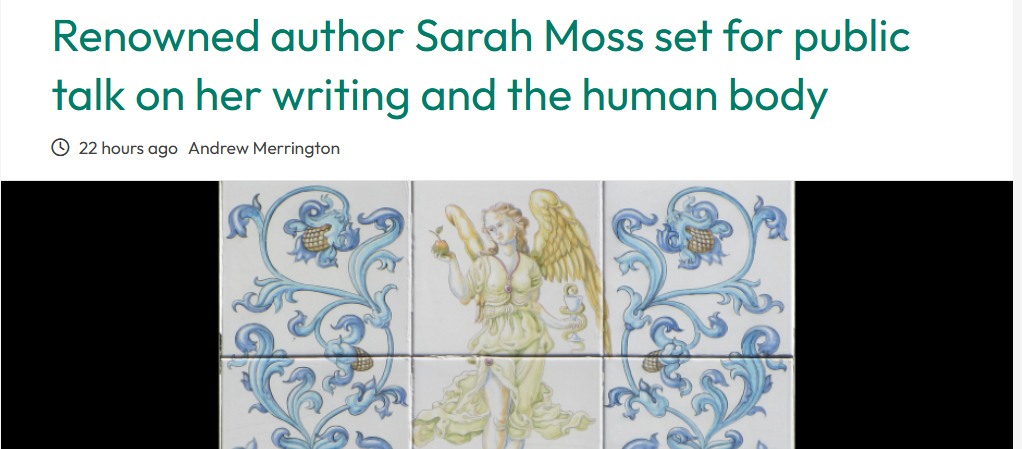
Renowned author Sarah Moss set for public talk on her writing and the human body – News

Categories
Events News

Writing Bodies: In Conversation with acclaimed author Sarah Moss – 7 May 2025

Join us for a discussion with author Sarah Moss as we explore the relationship between writing, health, and the human body. This free event takes place online and is open to the public – all welcome!

Read more information about the event here: Renowned author Sarah Moss set for public talk on her writing and the human body – News

Sarah told us about her interest in the Reading Bodies project: ‘I’ve been writing and thinking about literature and the body since my PhD on 18th-century travel writing, and especially in recent fiction and life writing as I explore what bodies say without and/or against words, and how literature can almost literally shape our bodies, especially in relation to girls’ reading and eating. My interest in writing, food and bodies wanders from 18th-century ships to modern and historical kitchens, from human remains in museums to ghosts on the mountains’.